Accountability first.

Accountability means recorded votes, not press releases.

WA-10’s current representative, Marilyn Strickland, accepted $355,452 from corporate PACs and committees. Adam Arafat has accepted $0.

When legislation that most people support never gets a vote, that’s not “complicated.” It’s a decision — and the funding record is the explanation.

The standard I will meet

In any real job, if work stalls, you escalate and you deliver. In Congress, the equivalent is simple: push for recorded votes, set timelines, and make obstruction visible.

This page is two things: transparent public funding data, and the governing standard I’ll use to earn trust.
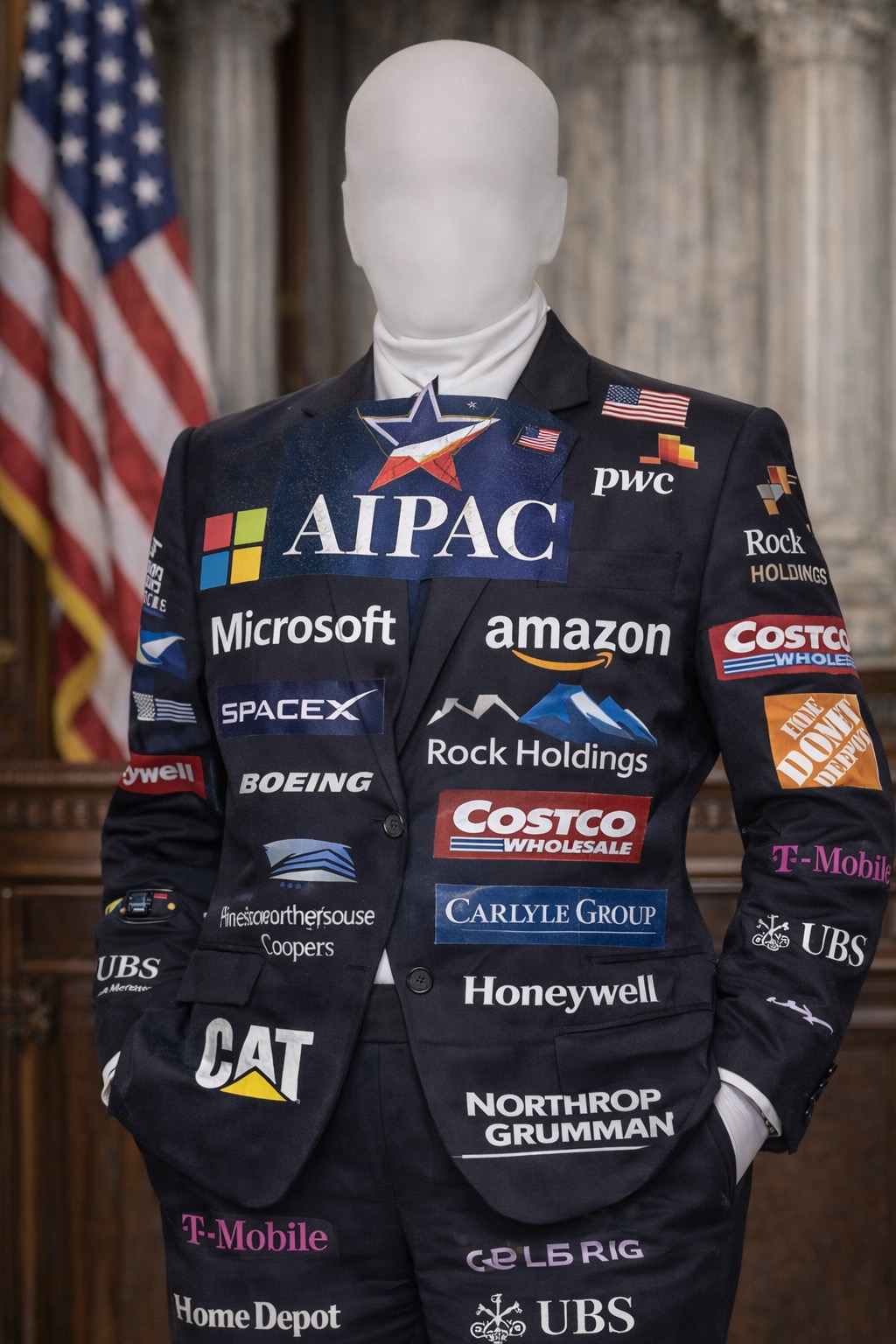
No corporate PAC or AIPAC money.
Graphic representing the visibility of committee and PAC funding in politics

“Politicians should wear sponsor jackets like NASCAR drivers, then we know who owns them.”

— Robin Williams
WA-10 Representative Marilyn Strickland
This graphic is an illustration to prompt transparency questions. Committee and PAC contribution totals referenced on this page are drawn from publicly available Federal Election Commission filings for the incumbent’s principal campaign committee. “PAC” refers to political committees as categorized and reported to the FEC.

Campaign funding is public for a reason. Review the official filings at FEC.gov.

The accountability standard

“Fighting” is not a vibe. It’s a method. Here’s what I will do in office, in public, so WA-10 never has to rely on trust alone.

What you can verify

  • Public tracking: I will publicly track what I co-sponsor, what I request to be brought to a vote, and what leadership refuses to schedule.
  • Timelines: For priorities I campaign on, I will publish a timeline: what I’m pushing, by when, and what happens if it stalls.
  • Escalation: If leadership blocks a vote, I will escalate publicly: procedural pressure, coalition pressure, and recorded accountability.
  • No donor ambiguity: No corporate PAC money. No AIPAC money. If I’m asking for your vote, you should know who funds me.
Why this matters: If something has broad support and never gets a vote, the public deserves to see exactly who blocked action and what happened next.

What this is (and isn’t)

This page does not claim criminal conduct. It uses disclosed public data and a basic governing question: who funds the campaign, and do public priorities get the urgency they deserve?

Transparency is the floor. Results are the job.

Follow the money (FEC)

This is the simplest accountability test in politics: who is funding the incumbent’s campaign? When committee money represents a meaningful share of campaign receipts, voters have the right to examine whether public priorities align with donor interests.

10-second summary

  • Claim:Funding sources shape urgency in Congress.
  • Local proof (WA-10):Large committee inflows are real and trackable in FEC data.
  • Action:Volunteer to build a people-funded alternative in WA-10.

Updated: Feb 26, 2026 (FEC summary review).

FEC committee summary (2025–2026 cycle)

Totals below are from the Federal Election Commission’s public committee summary for STRICKLAND FOR WASHINGTON (C00732826).

$872,745.90 Total receipts
$512,476.33 Total individual contributions
$355,452.00 Other committee contributions (PACs and committees)
Source: FEC committee financial summary (fec.gov). View: Committee page · Candidate page
Note: These are disclosed totals. They are provided for transparency and accountability.

What $355,452 in committee money means

  • Claim:Large committee dependence weakens trust in independence.
  • Local proof (WA-10):$355,452 from committees is more than the median WA-10 household earns in five years.
  • Action:Volunteer to replace donor leverage with neighborhood organizing in Lakewood, Olympia, and Spanaway.

Updated: Feb 26, 2026.

The bottom line

The incumbent's record

  • $355,452from PACs and committees in 2025–2026 cycle (FEC public data)
  • Not co-sponsored:H.R. 4457 (Housing Is a Human Right), H.R. 3069 (Medicare for All), H.J.Res. 54 (We the People Amendment / Citizens United)
  • Co-sponsored:H.R. 14 (John Lewis Voting Rights Act), good. The question remains: what was done to move it?

What Adam commits to

  • $0from corporate PACs or AIPAC. People-funded campaign only.
  • Co-sponsor on day one:Every working-family bill this district supports. Public record updated continuously.
  • Public escalation:If leadership blocks a vote, WA-10 will know exactly who blocked it and what Adam did next.

Example test: bills already written

The point isn’t that any one bill is perfect. The point is accountability: if leaders wanted action, you would see recorded votes and clear timelines. Here are examples of major bills with public text, ready for debate and a vote.

10-second summary

  • Claim:Congress already has written options on housing, healthcare, and worker power.
  • Local proof (WA-10):Families in Pierce and Thurston feel the cost of delay first.
  • Action:Volunteer to pressure for co-sponsorship and floor votes.

Updated: Feb 26, 2026 (bill status check).

Worker power

PRO Act of 2025 (H.R. 20)

Strengthens the right to organize and bargain. Voters deserve recorded votes, not endless delay.

Read: Bill text

Housing

Affordable Housing Credit Improvement Act (H.R. 2725 / S. 1515)

One example of legislation already filed that can support affordable housing supply.

Read: H.R. 2725 · S. 1515

Healthcare

Medicare for All Act of 2025 (H.R. 3069 / S. 1506)

Major policy proposal with public text. If leadership wants action, it schedules votes and takes responsibility for the outcome.

Read: H.R. 3069 · S. 1506

Bottom line

WA-10 shouldn’t have to guess whether anyone is “fighting.” You should be able to verify: recorded votes, timelines, and what happened when leadership stalled.

WA-10 deserves urgency, leverage, and accountability. If you’re tired of speeches without outcomes, help us build a people-powered campaign that can win.